
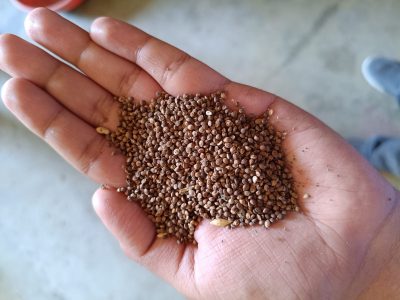
Kodo Millet: The Grain That Refused to Disappear
Three thousand years before anyone spoke of “superfoods,” a small, hardy grass was already feeding families. It was across the dry plains and hill tracts of India. Its name was Kodo (Kodo millet), botanically Paspalum scrobiculatum – and its story is less about invention than endurance.

Kodo never asked for much. While rice and wheat demanded rich soil and steady water, Kodo settled happily into poor, marginal lands. It kept surviving droughts that would have ruined more delicate crops. This toughness made it a lifeline for rural and tribal communities across central and southern India. Regions like Madhya Pradesh, Chhattisgarh, Karnataka, and Tamil Nadu, long before modern agriculture had a name for “climate resilience” Kodo made it sure it survives. Farmers ground it into flour for flatbreads, simmered it into porridge, and even fermented it into traditional beverages.
Then came the Green Revolution. High-yield rice and wheat swept across Indian fields, and millets like Kodo were quietly pushed to the margins, dismissed by many as a “poor man’s grain.” People accepted white wheat flour as premium and as food of royals. For decades, the Kodo and its story seemed to be ending.
But grains, like good stories, sometimes wait for the right moment to return. As diabetes, obesity, and gluten sensitivity became modern concerns, nutritionists rediscovered what tribal cooks had always known. Kodo, is remarkably rich in fibre and protein, low in glycemic impact, and packed with antioxidants, among the highest of any millet, in fact. It became a natural ally for anyone managing blood sugar, and a gluten-free alternative for those who needed one.

Traditional recipe books, like the very one this article draws from, kept the grain’s memory alive, guiding home cooks through dosas, khichdi, and porridges made from Kodo long after supermarket shelves had forgotten it.
Today, Kodo is being welcomed back. Not as a relic of scarcity, but as a smart, sustainable choice for a warming, water-stressed world. Its journey, from ancient staple to neglected crop to modern comeback, is really the story of resilience itself: quiet, patient, and ultimately impossible to keep down.
Leave a Reply