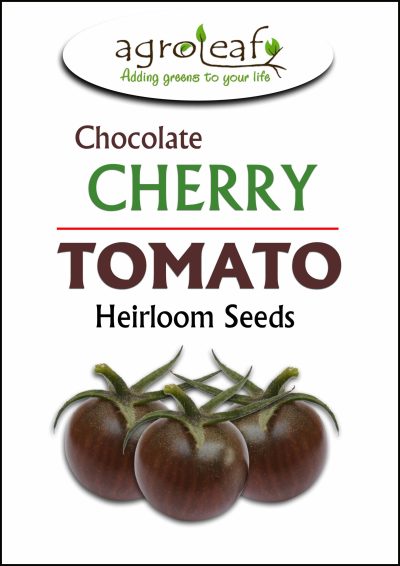
Chocolate Cherry Tomato: A Little Heirloom with a Big Story
There is something special about growing a tomato from seed that has been saved and passed down through generations. Unlike many modern commercial varieties bred primarily for uniformity, shelf life, and transport, heirloom tomatoes often carry something more, a story, a distinct flavour, and a connection to the diversity of crops that farmers and gardeners have maintained over time.One such fascinating variety is the
Chocolate Cherry Tomato.Small, round, and strikingly dark in colour, Chocolate Cherry tomatoes are a beautiful example of the diversity hidden within something as familiar as a tomato.
What is a Chocolate Cherry Tomato?
Chocolate Cherry is an
open-pollinated heirloom cherry tomato variety known for its small, round fruits and distinctive reddish-brown to chocolate-coloured skin.The fruits generally grow in clusters, producing a generous harvest over the season. When ripe, they develop a rich, deep colour that makes them stand out among the usual red, yellow, or orange cherry tomatoes.But the attraction isn’t only visual.Chocolate Cherry tomatoes are known for their
sweet, rich and balanced flavour, making them particularly enjoyable when eaten fresh. Their small size also makes them convenient for salads, snacks, sandwiches, and simply eating straight from the plant.
Why does it look “chocolate”?
The name comes from the tomato’s characteristic dark colour.As the fruit ripens, its skin can develop shades ranging from deep reddish-brown to chocolate, often combined with darker shoulders. The exact colour can vary depending on growing conditions, sunlight, maturity, and the particular seed line.This unusual colour is a reminder that tomatoes do not naturally come in just one form.Through centuries of cultivation and selection, farmers and gardeners have developed an enormous diversity of tomato shapes, colours, sizes, textures, and flavours.
Small fruit, big flavour
One of the joys of growing heirloom tomatoes is discovering that appearance does not tell the whole story.Chocolate Cherry tomatoes are small, but they can pack considerable flavour. The fruits are generally sweet with a pleasant acidity, creating the characteristic balance that makes a good tomato so enjoyable.And because they are bite-sized, they rarely need much preparation.Pick one when it is fully ripe, wash it, and eat it.For many home gardeners, that simple experience is one of the biggest pleasures of growing cherry tomatoes.
Growing Chocolate Cherry Tomato
Like other cherry tomatoes, Chocolate Cherry can be grown in a home garden, kitchen garden, raised bed, or suitable container.It generally prefers:
- Good sunlight – around 6 to 8 hours of sunlight is ideal.
- Well-drained soil – tomatoes dislike prolonged waterlogging.
- Organic matter – compost or well-decomposed organic manure can help maintain soil health.
- Regular moisture – consistent watering is preferable to repeated cycles of extreme drying and overwatering.
- Support – the plants can become vigorous and benefit from staking, trellising, or other support.
Because cherry tomatoes can produce fruits over an extended period, regular harvesting encourages the plant to continue producing.For gardeners interested in natural or regenerative approaches, tomatoes can also become part of a more diverse kitchen garden rather than being grown as a single crop. Compost, mulching, crop diversity, beneficial insects, and healthy soil biology can all contribute to a more resilient growing system.
Why heirloom tomatoes matter
The Chocolate Cherry tomato is interesting not simply because it is unusual.It represents something much larger:
agricultural diversity.Modern agriculture has increasingly moved towards a relatively small number of commercially preferred varieties. These varieties can offer important advantages such as uniformity, productivity, disease resistance, and suitability for large-scale supply chains.But there is another side to the story.Heirloom and traditional varieties preserve genetic diversity and offer characteristics that may not always be prioritised by commercial breeding, flavour, colour, local adaptation, culinary qualities, and cultural significance.When a gardener saves seeds from a successful plant and grows them again, they are participating in a very old agricultural practice:
keeping crop diversity alive.
More than just a tomato
A tomato seed may look insignificant – a tiny seed that can easily fit on a fingertip.Yet that seed carries genetic information shaped by years of selection and cultivation.Growing varieties like Chocolate Cherry gives us an opportunity to experience food differently. Instead of seeing a tomato simply as a commodity available in a market, we begin to notice its
variety, seasonality, flavour, seed, and story.This is particularly important at a time when conversations around sustainable food systems are increasingly focused on biodiversity and resilience.Crop diversity can be an important part of building food systems that are not dependent on a narrow range of crops and varieties.
Bringing diversity back to the garden
Perhaps the best place to begin is small.Grow a tomato variety you have never tried before.Save seeds where appropriate.Exchange seeds with other gardeners.Ask older farmers what varieties were traditionally grown in their region.Visit local seed keepers.And most importantly, taste the difference.Chocolate Cherry may be just one heirloom tomato among thousands of traditional and open-pollinated varieties around the world. But each such variety adds another colour, flavour, and story to our food system.The next time you see a basket of ordinary red tomatoes, imagine adding a few dark chocolate-coloured cherry tomatoes to it.Sometimes,
food diversity begins with something as small as a tomato.