
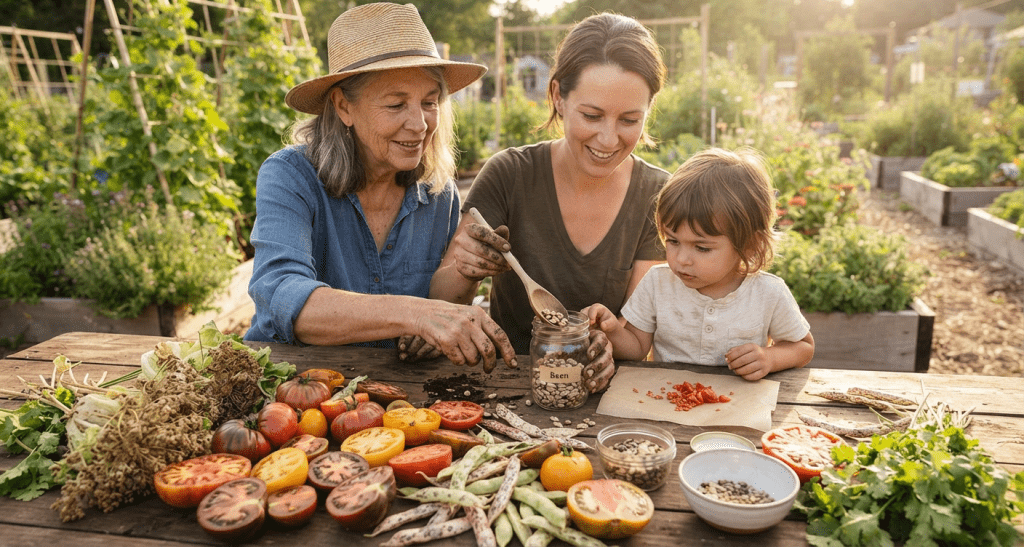
There is a quiet kind of magic that happens when you press a wrinkled, time-worn seed into the damp spring earth. You aren’t just planting a garden; you are tending to a living history book.
In a world increasingly driven by mass production, hybrid uniformity, and instant gratification, heirloom seeds offer us a chance to slow down. They invite us to step off the fast track of modern agriculture and reconnect with the rhythms of nature, flavor, and community.
Whether you are a seasoned homesteader or a balcony gardener dreaming of your first homegrown tomato, understanding the allure of heirloom seeds might just change how you look at your garden forever.
To understand heirlooms, it helps to look at what they are not. Modern commercial seeds are often bred for predictability—uniform size, thick skins that survive cross-country shipping, and simultaneous ripening for industrial harvest.
Heirloom seeds, on the other hand, are open-pollinated varieties that have been carefully saved, nurtured, and passed down through generations—often for 50 years or more.
Open-Pollinated: They are fertilized naturally by bees, butterflies, birds, or the wind.
True-to-Type: Unlike hybrid seeds, when you save seeds from an heirloom plant and grow them next season, they will grow up looking, tasting, and acting just like the parent plant.
Storytellers: Every heirloom variety carries the fingerprint of the families and communities who preserved it through wars, droughts, and changing landscapes.
Why swap out tidy, uniform packets of modern seeds for the delightfully quirky shapes and sizes of heirlooms? The rewards are profound:
Modern agriculture prioritizes shelf life and durability over taste. Heirlooms prioritize flavor above all else. When you bite into a Brandywine tomato or a Cherokee Purple, you aren’t tasting water and acid; you are experiencing a complex, rich, sweet explosion of garden-fresh flavor that simply cannot be bought in a supermarket.
Growing only a few commercial varieties is risky business—if a specific pest or disease hits, an entire crop can vanish. Heirlooms offer a rich tapestry of genetic traits. Some withstand sudden frosts better, while others thrive in drought conditions. By planting diverse heirlooms, you help safeguard plant biodiversity.
With heirlooms, the harvest never truly ends. At the end of the season, you can harvest your own seeds, dry them, and store them for the next year. You break the cycle of buying new commercial seeds every spring, embracing true self-reliance.
Diving into heirloom gardening is deeply rewarding, and you don’t need a sprawling farm to begin. Here are a few simple ways to incorporate them into your space:
Start Small: Pick one or two vegetables you love to eat—like slicing tomatoes, crisp radishes, or colorful beans—and buy certified heirloom varieties.
Check Your Climate: Look for regional heirlooms that have naturally adapted to weather patterns similar to yours.
Connect with Seed Swaps: Join local gardening clubs or online seed-saving networks to trade seeds and hear the unique stories behind them.
When we grow heirloom seeds, we become part of an unbroken chain stretching back hundreds of years. We taste the exact same sweet melon that our great-grandparents enjoyed, and we save seeds to pass down to those who come after us.
In every wrinkled seed lies a promise: that beauty, resilience, and incredible flavor will always find a way to bloom.
What is your favorite heirloom variety to grow, or which one are you most excited to try this season?
CONTACT US
Address: Sunrise, Zirakpur, India
WhatsApp us: +91 86998 10205
Mail us: info@agroleaf.in
Copyright 2021 © Agroleaf. All rights reserved