
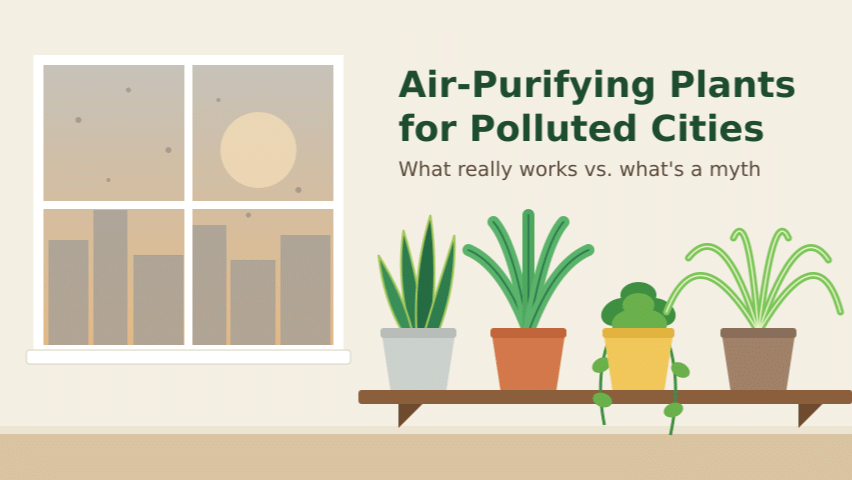
Air-Purifying Plants for Polluted Cities: What Really Works and What’s a Myth
If you live in Delhi-NCR, Lucknow, Bathinda or any other city where winter air turns grey, you have probably seen claims like “keep a snake plant and your air will be clean.” It sounds great, but is it true? Let’s separate fact from myth.
Where the Idea Came From
In 1989, NASA ran a famous study showing that some houseplants can remove chemicals like formaldehyde and benzene from the air. Since then, lists of “air-purifying plants” or indoor plants have gone viral.
The catch is that the test was done in small, sealed chambers, not in real homes with open doors, fans, and fresh air coming in. Later research, including a 2019 review by Drexel University, found that you would need anywhere from 10 to 1,000 plants per square metre of floor space to clean indoor air as well as simple ventilation does.
The Myths
- Myth 1: A few pots can clear city smog. Plants cannot remove enough PM2.5 or PM10 from the air to make a real difference in a polluted city.
- Myth 2: Plants can replace an air purifier. They cannot. If air quality is bad, a good HEPA purifier does far more.
- Myth 3: More leaves means cleaner air. Not really. The effect is tiny, no matter how big the plant is.
What Plants Actually Do
Plants may not be miracle air cleaners or The Air-purifying plants, but they still help your home:
- They add a little moisture to dry winter air.
- They can lift your mood and reduce stress.
- Leaves trap some dust, so wipe them regularly and they look better too.
- They make a room feel calmer and more alive.
Easy Indoor Plants Worth Growing
These are hardy, beginner-friendly, and good for Indian homes:
- Snake plant: survives low light and little water.
- Money plant (pothos): grows in water or soil, and is almost impossible to kill.
- Spider plant: easy to grow and multiplies quickly.
- Areca palm: gives a lush look and likes bright, indirect light.
- Aloe vera: likes sunny spots, and the gel is handy for skin care.
- Peace lily: flowers indoors, but it is toxic to pets, so keep it away from cats and dogs.
How to Actually Improve Indoor Air
- Ventilate when outdoor air is relatively clean, usually mid-afternoon.
- Use a HEPA air purifier on high-pollution days.
- Avoid indoor smoke from incense, mosquito coils, and cigarettes.
- Dust and mop often, preferably with a damp cloth.
- Add plants for freshness and greenery, not as your main defence.
Final Thoughts
Houseplants are wonderful, but they are not air purifiers. Grow them because they make your home beautiful, peaceful, and healthier for your mind, not because you expect them to fight smog. For truly cleaner air, combine good ventilation, a purifier when needed, and a few green friends.
Leave a Reply